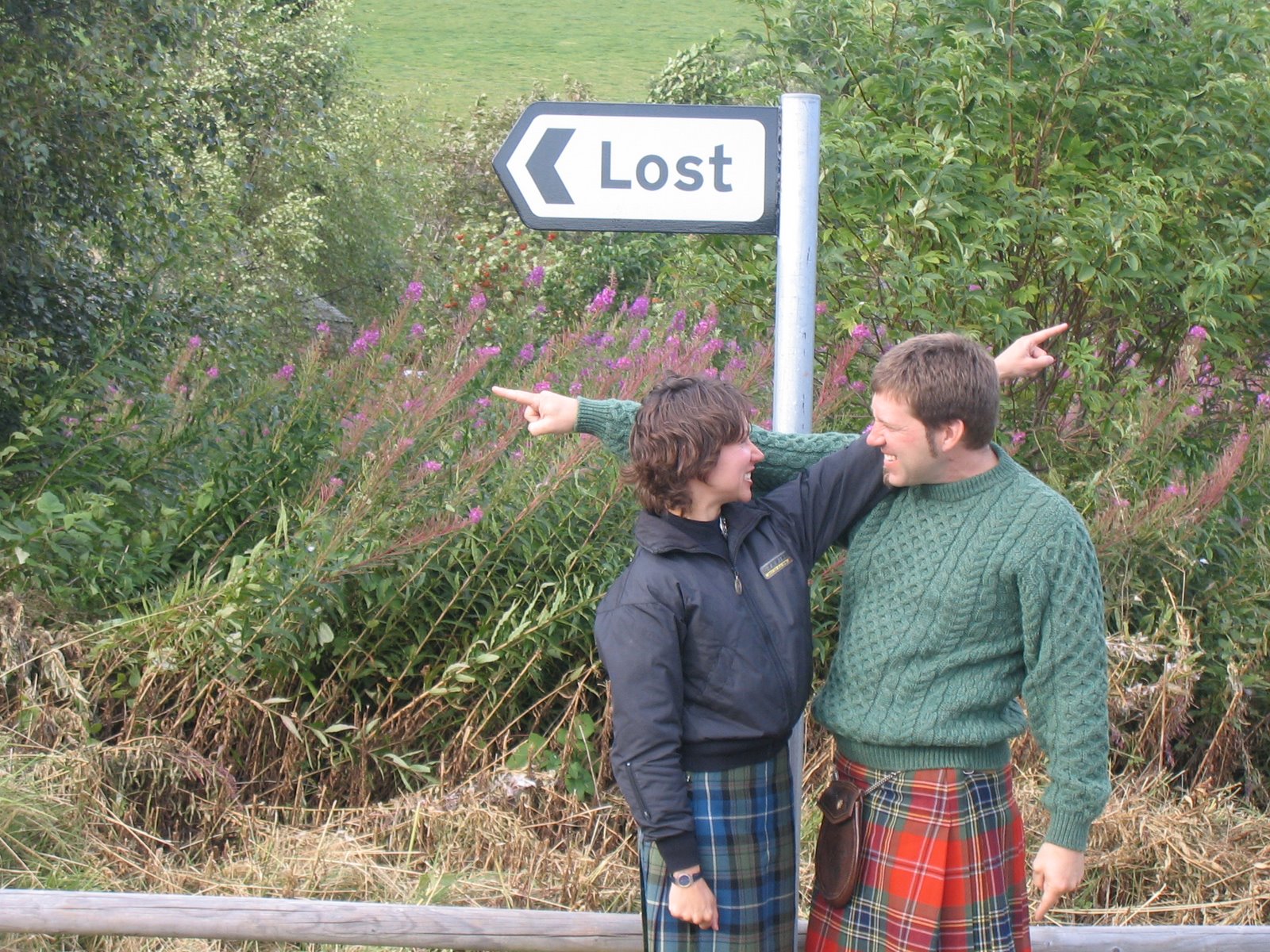
Clara and I had two options this morning: the fast road to Kathmandu or the slow road that no one travels, that is all twisting and through the mountains with a distant view of Mt. Everest from an 8,000 foot peak. You can guess which one we took. It is a beautiful day, in the 50's, clear sky to see the Himalayas in the backround. We have met up Shyam, enjoyed some momo's, and now we are going to try and find a new camera.
go pats!
Sunday, January 20, 2008


Saturday, January 19, 2008
Getting out of India and into Nepal
As Clara and I got closer to the Nepal border we braced ourselves for what was to come. The last city in India was a cacophony of 600,000 people, horns, pollution and dust and dirt. We had of course heard about India being such an advancing country, and how poor Nepal was. The last 60 miles to the border became more and more poor, the roads narrower and more broken. I finally had an accident in India, when a guy on 125 saw someone he knew passing him in the other direction on the 10 foot wide road. He decided to immediately stop in the middle of the road, with me about 5 feet behind him. Luckily we were going less than 10 miles an hour, I slammed on my brakes but the crash was inevitable on the loose dirt and stone so I steered directly into his back wheel and just bumped him off to the side of the road. He remained upright. I slowed down and glared, as he looked back with a surprised but knowledgeably guilty look. The point is, that Clara and I were preparing ourselves for even worse, dirt track roads and utter chaos.
What we found shocked and surprised us in such a positive way, that we were singing with Glee as we rode along the wide, well paved highway with well behaved traffic, smiling waving children, and well spoken women unafraid to talk to us giving us directions. We started singing the “What a concept!” game.
Not many Indians have been outside India. If they would take the time to visit their northern neighbor of Nepal they might learn some concepts that would improve their quality of life. The best part is that many of these changes are free of charge and the tools required are readily available. For example:
Turn Signals: What a concept!
Mirrors folded out to see behind you: What a concept!
Everyone driving the correct direction: What a concept!
No cows on the roads: What a concept!
Bikes and pedestrians on the shoulder of the highway: What a concept!
Shoulder of a highway: What a concept!
No trash in the rivers: What a concept!
Which leads to: clear water: What a concept!
Air you can breath: What a concept!
Answering questions, not staring: What a concept!
Forests: what a concept!
Some things might cost some money, but investment reaps rewards:
A tourism office at the border with information about your country: What a concept!
All children going to schools: What a concept!
Clean roads: What a concept!
Limited population: What a concept!
Clean drinking and non-suspicious bottled water: What a concept!
Finally, it is amazing sometimes what a difference a border can make. One side of the border the cow is sacred, on the other it is our dinner. Food for thought.
What we found shocked and surprised us in such a positive way, that we were singing with Glee as we rode along the wide, well paved highway with well behaved traffic, smiling waving children, and well spoken women unafraid to talk to us giving us directions. We started singing the “What a concept!” game.
Not many Indians have been outside India. If they would take the time to visit their northern neighbor of Nepal they might learn some concepts that would improve their quality of life. The best part is that many of these changes are free of charge and the tools required are readily available. For example:
Turn Signals: What a concept!
Mirrors folded out to see behind you: What a concept!
Everyone driving the correct direction: What a concept!
No cows on the roads: What a concept!
Bikes and pedestrians on the shoulder of the highway: What a concept!
Shoulder of a highway: What a concept!
No trash in the rivers: What a concept!
Which leads to: clear water: What a concept!
Air you can breath: What a concept!
Answering questions, not staring: What a concept!
Forests: what a concept!
Some things might cost some money, but investment reaps rewards:
A tourism office at the border with information about your country: What a concept!
All children going to schools: What a concept!
Clean roads: What a concept!
Limited population: What a concept!
Clean drinking and non-suspicious bottled water: What a concept!
Finally, it is amazing sometimes what a difference a border can make. One side of the border the cow is sacred, on the other it is our dinner. Food for thought.
Friday, January 18, 2008

How Less Big is the Taj Mahal

People in Pakistan have heard the rumors that the Taj Mahal is not that Big. I think they have seen too many of these pictures!
India v. Pakistan
India:
More smells per mile than teeth in their smile!
There is a difference between a male dominated society and a female oppressed society. Neither is desirable, but there is a stark contrast. To experience it, just cross the Attari border between Pakistan and India and the change is readily apparent. It was such a pleasure to come back into India and see brightly dressed women laughing and smiling in the streets. You don’t realize what you miss until you don’t have it anymore. In Pakistan women are rarely seen in public, and when they are out they are dourly covered up especially outside the cities, often in full burka. As we were passing through one tiny village waving at the children, one girl about 14 waved at us and her friend quickly knocked her hand down to stop her, clearly afraid they might get in trouble for such a public display, however innocent. In India men run all the businesses, men make up 89 percent of elected officials, men dominate the household and men leer at the women. But, you do see women walking around in their bright saris, usually in groups, doing their shopping or chores, or working. They drive, they laugh, they even do heavy construction, often with men standing idly next to them. An example of the limits of their freedom is that the divorce rate is only 11 per 1000 because of the extreme ostracism for any women who doesn’t fulfill her proper role in the family. But it is still apparent that women have a far better chance in India than Pakistan.
The experience for males in the two countries, however, is quite different. We had dinner with 23 year old Greek motorcycle overlander Ilias Vrochidis in Agra. He has been on the road for 9 months from Thessaloniki, through Turkey, Iran, Pakistan, India and Nepal. We asked him what he thought of his time in Pakistan and he said he had a great time there last fall in September and October. The people were extremely friendly, as is the Muslim way where guests are a sign of God’s grace on the hosting family. He would often pitch his tent somewhere, and people would inevitably come over to him to offer him some chai tea and very often invite him to stay in their homes. We asked him what he thought of the Indians and he gave us a smile and a leaning back head nod coupled with the rolling back of the eyes which said “come on, you’ve been here, do you really need me to reconfirm for you how bad they are?” But, we pressed him so he continued. When he would go to camp in India, even in out of the way places, people would often come to him and tell him that he couldn’t sleep there and that he needed to move on. No one has invited him in, or tried to make him feel welcome.
Our experience has mirrored that. In our one month in India, only one time did some extremely nice young motorcyclists invite us back to their home. Even then, they warned us not to trust or believe anything an Indian told us. This was echoed by other European, Turkish, and Indian friends. We were also hosted by the wonderful Daruwala family, but they are friends from America which I don’t really count. We were only in Pakistan for the 10 days following Bhutto’s assignation and in that time we stayed in a Pashtun home, had evening meal with family of 6 in the NWFP, and were treated to dinner twice in Islamabad by a journalist I coldemailed. In addition, we were invited to tea and people’s homes in Rawalpindi and on the SWAT border which we had to refuse due to time constraints. All this on top of the fact we spent most of our time staying with Kathy and James of the RAF on a Pakistani Air Force base.
More later….
More smells per mile than teeth in their smile!
There is a difference between a male dominated society and a female oppressed society. Neither is desirable, but there is a stark contrast. To experience it, just cross the Attari border between Pakistan and India and the change is readily apparent. It was such a pleasure to come back into India and see brightly dressed women laughing and smiling in the streets. You don’t realize what you miss until you don’t have it anymore. In Pakistan women are rarely seen in public, and when they are out they are dourly covered up especially outside the cities, often in full burka. As we were passing through one tiny village waving at the children, one girl about 14 waved at us and her friend quickly knocked her hand down to stop her, clearly afraid they might get in trouble for such a public display, however innocent. In India men run all the businesses, men make up 89 percent of elected officials, men dominate the household and men leer at the women. But, you do see women walking around in their bright saris, usually in groups, doing their shopping or chores, or working. They drive, they laugh, they even do heavy construction, often with men standing idly next to them. An example of the limits of their freedom is that the divorce rate is only 11 per 1000 because of the extreme ostracism for any women who doesn’t fulfill her proper role in the family. But it is still apparent that women have a far better chance in India than Pakistan.
The experience for males in the two countries, however, is quite different. We had dinner with 23 year old Greek motorcycle overlander Ilias Vrochidis in Agra. He has been on the road for 9 months from Thessaloniki, through Turkey, Iran, Pakistan, India and Nepal. We asked him what he thought of his time in Pakistan and he said he had a great time there last fall in September and October. The people were extremely friendly, as is the Muslim way where guests are a sign of God’s grace on the hosting family. He would often pitch his tent somewhere, and people would inevitably come over to him to offer him some chai tea and very often invite him to stay in their homes. We asked him what he thought of the Indians and he gave us a smile and a leaning back head nod coupled with the rolling back of the eyes which said “come on, you’ve been here, do you really need me to reconfirm for you how bad they are?” But, we pressed him so he continued. When he would go to camp in India, even in out of the way places, people would often come to him and tell him that he couldn’t sleep there and that he needed to move on. No one has invited him in, or tried to make him feel welcome.
Our experience has mirrored that. In our one month in India, only one time did some extremely nice young motorcyclists invite us back to their home. Even then, they warned us not to trust or believe anything an Indian told us. This was echoed by other European, Turkish, and Indian friends. We were also hosted by the wonderful Daruwala family, but they are friends from America which I don’t really count. We were only in Pakistan for the 10 days following Bhutto’s assignation and in that time we stayed in a Pashtun home, had evening meal with family of 6 in the NWFP, and were treated to dinner twice in Islamabad by a journalist I coldemailed. In addition, we were invited to tea and people’s homes in Rawalpindi and on the SWAT border which we had to refuse due to time constraints. All this on top of the fact we spent most of our time staying with Kathy and James of the RAF on a Pakistani Air Force base.
More later….
Wednesday, January 16, 2008
On to nepal?
We are 60 miles from the Nepal border, we head to the Himilayas in a few hours.
India, land of the sweater vest, can be described in one word: annoying. Clara is getting grouchy with the starers, and I'm flummoxed with the traffic, lack os signage, and misdirections.
The food however is delicious, although a bit spicy for Clara and I was punished for eating street food wrapped in dirty paper.
Sent via BlackBerry by AT&T


Tuesday, January 15, 2008
Not horny for Once

Yet another reason not to trust a BMW 1200gs for your round the world trip: faulty, phantom horn.
The horn on the bike has taken on a personality all its own, as if possessed by one of the 16,000 Hindu gods. Basically it decides to stop working at inopportune times. In India, any time you don't have a horn is inopportune. Trucks paint "horn please" on the back of their trucks and then throw away their mirrors. Everyone else just throws their mirrors away or folds them in. I'm not kidding, 80 percent of the vehicles on the road have no mirrors, everyone just honks at each other, and if you don't hear a honk you hog the road.
The horn first went in the narrow winding streets of old Bikaner. Just stopped working after 7 hours of constant use. Then it worked fine for about a week. Now it always works the first time I use it, then sometimes goes dry on the second try. So, I shift into neutral kill the bike, turn it on and start it all while coasting down the road to "reset" my gun for that one potential lifesaving honk. I have sometimes resorted to "honking" out loud with my voice in slow city traffic when fighting bikes, rickshaws and cows. Clara ends up laughing which kind of defeats the purpose. Sometimes the horn will work perfectly for hours and then die right before we almost do.
So, thanks BMW for selling me a bike worth 10 times all the Honda Heros on the road without the single most important safety device in India.
Oh, we also shared food and prayers today with the second most important Buddhist after the Dalai Lama, the 20 year old kid who walked from Tibet to here to escape the Chinese.

We are in Sarnath where Buddha gave his first sermon to his first five disciples about the "middle way" to achieve Nibbana.
Very serene and calm here, different from much of India.
Sunday, January 13, 2008
Do you know what's fun in Uttar Pradesh?

About 20 miles outside Agra I was enjoying a nice Sunday ride on a four lane divided highway. I let my mind wander for about 10 seconds as there was no traffic and looked to the green fields to my left. As I calmly reverted my gaze back to the road, I nearly had a heart attack: a semi was heading straight for me in my passing lane at about 50 miles per hour about 75 yards away just as I swerved he hit his horn, and we missed him by about 2 feet. If we survive India, I will look back fondly on our insane time here as things are so crazy and illogical you just have to laugh.
But, they have good peanut brittle.
Some of the fun things to do in India we saw today:
Sleeping on the highway is fun.
No road signs around work projects is fun.
Popping a monster wheelie in your tractor across the highway is way too much fun.
Herding your water buffalo the wrong way down the highway is fun.
Driving your car, motorcycle, scooter, truck, bus or rickshaw the wrong way on the highway is fun. Or just walking in the middle of the road.
Parking your trailer on the highway is fun.
Leaving your truck to truck head on collision in the highway is fun.
But the most fun we saw right in front of us was a tanker truck squeezing onto the highway in the same space as a big hauling truck. As Dolly Parton once said "you can't get 100 pounds of feed into a 50 pound sack" the two trucks collided, crushing the front right corner and knocking parts off the hauler. The tanker gave a look back but kept on moving! We were about 100 meters behind as this happened and as we caught up to the tanker we were following a black path on the road. I was a bit worried it was oil, but as we cruised by (on the inside of course) we saw the left side of the tanker crumpled and gored with a metal mud guard eating into one of the tires. Now that is a lot of Fun!
Many people have told us that if we have an accident and we can still move that we should get out of there ASAP.
We are now in Kampur a city of a million with no tourists. I think we may set an all time staring record here. We look like we just arrived on the Startrek Enterprise and we have two heads. But people seem pleasantly happy here, and there aren't the annoying hawkers surrounding the tourist sites.
Tomorrow we goto the sacred Ganges the most important place to be cremated on the gnats in the Hindu world.
We got up at 6:30 this morning to see the Taj Mahal. It is without Equal, truly stunning and living up to all its hype.

Go Pats!
Saturday, January 12, 2008
Pictures from Agra!


We visited the Agra Fort today, which used to be the capitol of the Mughal Empire. We also rode across an old railroad bridge and viewed the Taj Mahal from the other side of the river. The Army guard insisted that we couldn't bring our motorcycle there in no uncertain terms. Then his boss came out and said we could do it for $13. I turned to leave and offered him $2.50. He said "No", I drove 50 feet away as if I was leaving, and he came up to me and accepted my offer.
In India, everything and anything can be done for a price. As we waited in line for the Agra Fort for about 20 minutes, throngs of foreign and local tourists cut to the front of the line, gave the security guard some baksheesh and cut in front of everyone to buy their entrance ticket. As I got to the front of the line and saw this blatantly going on, I asked in a loud voice "how corrupt is everyone here?", one guard sort of sheepishly left the scene, but two local tour guides insisted "we are working for you", as if taking money from tourists to payoff security guards and leaving all the honest people in the lurch is a good thing. The worst part of it all is that everyone knows it, and everyone accepts it. It seems to me to be difficult to have a democracy when there are so clearly different classes of people who expect and get different service from the government according to what they can pay.
People in Mumbai told us about government doctors who would tell them to come to their houses after work if they wanted real service. Quite pathetic.
Tonight we are having dinner with a Greek overlander, the first adventure motorcyclist we have seen in Pakistan or India. It will be good to swap stories and get his lowdown as he has been traveling in the area for 5 months.
Friday, January 11, 2008
What a day!
Today we rode for 8 1/2 hours, including the three hours that it took us to find our way to, through, and out of Delhi, to get to the city of Agra where the famed Taj Majal is.
On this day our patience was stretched and tested to the limits as we inched along at no more than 30mph through the harrowing traffic that defines the highways and byways of India; where, at the same time one must deal with animal-drawn (cows, donkeys, camels) carts bicycles, bicycle-taxis, rickshaws, rickshaw "trucks", regular taxis, regular cars, tractor-trailer, dumptrucks, buses, motorcycles and pedestrians. Not only does one deal with all this "traffic" traveling at various speeds from 0 to 60mph, but there is the added challenge that one can encounter them coming AND going on the same side of the highway as well as crisscrossing from side to side! This is why since we arrived in India I have often felt that we are stuck in a game of "Frogger" (on steroids!).
So, after traveling a mere 100 miles in no less than 7 1/2 hours, both Kevin and I were so much near our breaking points that Kevin had actually kicked a car that got too close to us and I was quietly singing Abba songs and we were ready to turn on each other...but we didn't, and we were rewarded when we simultaneously looked to the right shoulder and saw the huge shape of an elephant materialize right before our eyes! That's right, we finally saw the elusive pachyderm we've been searching for since we arrived in this crazy country. And that is reason enough to end the day with a big Woo Hoo!!!
Sent via BlackBerry by AT&T
On this day our patience was stretched and tested to the limits as we inched along at no more than 30mph through the harrowing traffic that defines the highways and byways of India; where, at the same time one must deal with animal-drawn (cows, donkeys, camels) carts bicycles, bicycle-taxis, rickshaws, rickshaw "trucks", regular taxis, regular cars, tractor-trailer, dumptrucks, buses, motorcycles and pedestrians. Not only does one deal with all this "traffic" traveling at various speeds from 0 to 60mph, but there is the added challenge that one can encounter them coming AND going on the same side of the highway as well as crisscrossing from side to side! This is why since we arrived in India I have often felt that we are stuck in a game of "Frogger" (on steroids!).
So, after traveling a mere 100 miles in no less than 7 1/2 hours, both Kevin and I were so much near our breaking points that Kevin had actually kicked a car that got too close to us and I was quietly singing Abba songs and we were ready to turn on each other...but we didn't, and we were rewarded when we simultaneously looked to the right shoulder and saw the huge shape of an elephant materialize right before our eyes! That's right, we finally saw the elusive pachyderm we've been searching for since we arrived in this crazy country. And that is reason enough to end the day with a big Woo Hoo!!!
Sent via BlackBerry by AT&T
Thursday, January 10, 2008
Lahore

We drove through Lahore yesterday, and if we hadn't bribed a border guard (not the one in the picture) to get into India today we would have had to turn back to the city of Lahore and would have probably been staying 2 blocks from today's bombings.
Our heart goes out to those killed, and to all our new friends in Pakistan who only want to live in a safe environment.
Peace.
10:01:08
My story about 10:01 and my friend Mark Schneider was published in Wabash Magazine, and I have received some nice thoughts from our contemporaries.
One came today from old frat brother Scott Lucas. It turns out that Mark sold Scott an Amp back in the day which Scott has refurbished and kept, thinking about Mark whenever he breaks out his axe.
As I pulled into our hotel tonight I saw the date was 10:01. Mark is still bringing us together.
Sent via BlackBerry by AT&T
Wednesday, January 9, 2008
Back to india!

After a harrowing days ride of 200 miles through Pakistan which included a ridiculous Police pullover and a close encounter of the muddy kind with a donkey and its cart we made it to the border with 10 minutes to spare.
The Pakistani guys were incredibly nice again and rushed us through but the Indians wouldn't let us in. Staring a night in No Mans land in the eyes forced me to whip out the cash and bribe the Supervisor. The carnet people remembered us and let us in without any additional payment. Clara was pissed but it was only $5.
It feels good to not worry about the Taliban and suicide bombers although the traffic was waiting for us with full fury.
I spent my last night in Pakistan broadcast nationally on Radio 1, FM 91 taking questions from callers and from SMS messages from 11 to midnight with my Pashtoun soul brother number one Fasi. People asked about George Bush, India v. Pakistan and lots about bikes. The people were great and we got way more calls than normal and they asked us back tonight, but as Eric Burden would say "we gotta get out of this place!". Pakistan leaves the last 20 miles to the border a muddy chaotic mess to remind you not to come back, however being objective I think the Pakistani border guards were better at the Worlds most watched and elaborabe border closing.
Sent via BlackBerry by AT&T
Monday, January 7, 2008
Unfinished Diatribe about Turkey
Clara and I have decided to head back to India. We have absorbed a lot of Pakistan, and the 5 bombings and one killing by the Taliban in the City where we had dinner tonight, along with the multiple emails from Clara's mother has swung the pendulum back towards the worlds largest democracy.
We have a dinner invitation from Fasi Azir in the Capital of Islamabad tomorrow. He is a "minor celebrity" in his own words, and a national newspaper columnist whom we met with earlier after I emailed him. Looking forward to more of his insights from this Rhodes Scholar into his native land.
Until we get to post more, here is an unfinished work about my thoughts on Turkey:
TURKEY
First of all, Turkey is a real place. Not just another border arbitrarily drawn on a map, but a place with an identity, a culture, a feel, a look and especially a history all of its own.
It is a place of many stereotypes, with constantly surprising exceptions. Most of all, Turkey is a success, not a perfect one, but an evolving one: a secular Muslim country set
up by Ataturk bridging Europe and Asia, Christianity and Islam, the past and the present,
unlike any other place in the world.
Turkey is:
Arabic calls to prayer 5 times a day
Baklava
Ubiquitous Red Flag’s with crescent, on flagpoles, cars, doors, windows
Full of Smokers
Rug salesmen
Turkish delight
Chai Tea
Insane drivers with no training
Corrupt officials
Turkish barbers giving a close shave
Overseen by the military for better and worse
Backgammon
Full of Fisherman, spending days catching sardines & other things
Middle aged men with prayer beads
Hospitality
Proud and Nationalistic
Growing and polluted
Beautiful coasts
Evil Eyes
Ceramics, markets and historic ruins
Veiled women, hairy men and mustaches
Crooked noses
“Merhaba” and “Teshe Koller” (hello and thank you)
Raki
The Bosphorus
Olives, nuts, apricots, fresh fruits and vegetables
Late night clubs, Turkish music, and street vendors
Ataturk
Turkey is not:
A place for a woman to kick someone in the groin
Organized
Chicken
A place to buy without haggling
In the EU. Yet.
Cheap Gas
Easy to Describe
To describe Turkey you have to start with Ataturk. Ataturk is the father of modern Turkey, equivalent to Americans of Washington, Adams and Jefferson all rolled into
one. He was warrior, statesman, humanist who seems to have foreseen the problems
of the modern world decades ahead of his time. He was an army officer who came to prominence when he led the Turkish troops in their repulsion of the superior English, French, Australian and New Zealand troops at Gallipoli in the First World War. Even at that point he showed compassion for the fallen of the enemy saying to the mothers of the dead that their loved ones were at home in Turkey, equivalent to the loss of the loved ones of the Turkish mothers. After the War, the victorious powers tried to carve up the remains of the Ottoman Empire, but Ataturk took over from the Sultans, expelled the foreigners militarily and set up the modern Turkish state. He foresaw the problems of fundamentalism and set the country up as a secular democracy, with the military overseeing the nascent country allowed to step in and dissolve the government if it believed the elected powers were not being true to the fundamentals of the state. He famously said “Peace at Home, Peace in the World”. He is revered in Turkey and virtually every business has a prominent picture of him in their front lobby. Turkish flags with his face are flown on flagpoles, from balconies, in the rear window of cars. There are statues of him in every town and he is more revered even than Bolivar in Venezuela.
He forbade the wearing of head scarves in schools and business, and it was fascinating to see the pictures of his funeral procession, with hundreds of thousands lining the streets with nary a head scarf to be seen. But yet you can pick up a paper today and see articles about a high school girl being in trouble for wearing a head scarf to receive an award, and certainly will see Ataturk’s name and his ideas known as Kemalism throughout the news.
As an American it is hard to truly get a feel for what it is like to be Turkish. Americans live in fear of perceived enemies thousands of miles away around the world. Turkey has borders with the Europeans whom have invaded for millennia, the Greeks whom they have fought for millennia, the Armenians whom they have fought with for centuries, the Russians are just across the Black Sea, the Persians in Iraq who are Shiites and at odds with Turkish Sunni’s, Iran with a defacto Kurdish state harboring separatist terrorists, and Syria a conduit to the Arabs who abhor the liberal secular society in modern Turkey. Who can blame the Turks for being a bit defensive? But, unlike America which seems to be able to have wars with countries like Japan, England, Germany, and Vietnam and put the past behind us, it seems as if Turkey has a harder time burying the hatchet. To be fair, however, it seems as though they are not the only ones in this part of the world with that problem.
You will find quite a bit of boastfulness or national pride around here. A Kurd we met let us know that the best doctors in the world are Iraqi, that his town had the best food in all of Iraq as proclaimed by none other than Saddam Hussein, and that Kurds actually invented Turkish Delight. A Turkish tourist brochure let us know that Turkish food is one of the three most important in the world. A nightclub in Bodrum assured goers that it was the loudest (and wildest, with the most bubbles!) in the Mediterranean. Plus there is the national statute known as 301 which vaguely outlaws any act or gesture against “Turkishness”.
On the one hand Turks will go out of their way to tell how open they are to all cultures, for example: a centuries old British Fort with a St. George cross in the rock had a description that proclaimed that the fact that the Turks hadn’t ground the granite flat showed how tolerant they were of other people. Many conversations went along the lines of “we don’t have a problem with the __________(Greeks, Kurds, Armenians,….), it is they who have a problem with us. We never did anything, or hardly anything, to them.” For those of us in America a bit dubious of hearing from our leaders about how other countries hate us although we’ve Never done anything to them, starting down this path without objectivity seems potentially divisive. However, scratching beneath the surface and getting to know locals is to find people who really are very tolerant of others, welcoming to all, and perhaps most important: dismissive of the many intolerants around them.
Our last night in Turkey we even discovered that one of our local friends was Jewish and that her family had lived in Turkey for generations, although they don’t go out of the way to advertise it they go about their lives without fear. Make no mistake, this country is 98 percent Muslim, with the calls to prayers being heard from anywhere in the country 5 times a day, with women covered in veils and burkas, men moving their lips and fingers in conjunction with their prayer beads, feet washing at mosque’s and roadsides, and prayer rugs directed at Mecca being used in tiny windowless rooms in businesses everywhere. This, to me, is clearly the success of Turkey: comfortable with their relationship with Islam and showing a way forward in this part of the world where tolerance and acceptance trumps the dictatorial fanaticism elsewhere. As one attractive, sexually liberated, highly educated, well traveled woman told us: “the Persians hate our secular government, the Arabs don’t think we’re Muslims, but we just laugh it off and don’t take them seriously.”
As I was falling asleep last night I thought that Turkey was the closest country in the world so far to the United States. There are rich and poor, a strong middle class, a large minority population whom everyone professes to be friendly with, but warns you not to go into “their” neighborhoods. They have had waves of immigrants, coming and going and they have in the past been brutal to others not like them. They have an active political scene with strong liberals wanting to embrace European ways, and religious conservatives who want to dictate behavior to the masses. The cities are liberal, the countryside is conservative. They have a strong and active military, a growing population and a key part to play in world affairs. The three most flag waving countries in the world are Brazil, Turkey and the USA. Is it any wonder that I find the place so endlessly fascinating, even in the dead of a cold and rainy winter?
Random Observation: For some reason about 90 percent of the people traveling at the airport have burgundy bags. There seem to be a lot of religious travelers here, a high percentage of women in scarves and robes and men in towels and head knits, coming back from or going to their Haj.
The Turks are incredibly friendly, especially once you get outside of the tourist realm. Of course, everyone will offer you tea as soon as you walk into their home or business, but it goes much deeper than that. One tailor who charged Clara $5 to hem her burka, refused to accept payment when I came a week later to sew my rain suit and glove. People went out of their way to help us, to make us feel comfortable, and to just include us in their daily lives. We were invited to people’s homes for dinner, invited to see musicians at their shows, invited to places of work, and best of all to come and stay with them while we waited for our visas. We tried to repay as best we could, by fixing their motorcycles, planing their doors, making and buying food, but it felt like not enough and we really hope to host as many as we can some day back in the States.
The Turks are a happy people, comfortable in themselves. Laughter is evident everywhere. Turks greet each other with a kiss on each cheek, man to man, woman to woman, man to woman, and foreigner to friend. They go out for dinner, drink alcohol, smoke like fiends, have strong opinions, and are open to learning and new things. Most towns have a bazaar one or two days a week with food, clothes and other household items in abundance. Sellers hawk their goods from street corners, to shops, to restaurants. You can buy roasted chestnuts, mussels and smoked fish burgers on the streets. Every waterway is draped with fishermen catching anchovies and whatever else may come along.
There are many women with head scarves and burkas, many not. As Clara has observed, life for Muslim women can be hard especially in the tinier towns. They work the fields, they care for the children and the home, while the men seem to congregate at cafes to drink tea, talk and watch football. We see many women, hunched over from years of hard work. Many of the women seem to have grown into their burkas; it almost seems if they are not allowed to portray themselves in public they let it go to waste. Even when they are able to wear pants, they are the most unflattering we’ve seen yet with yards of extra cloth added for some unknown reason which would make even Angelina Jolie unfit for a seductive look. Women certainly are not completely free in this society, although the laws seem to be in place. Half the university students are female, and many of them work, have their own businesses and dress in a stylish Western way.
The roads are in passable to excellent condition. There is diverse scenery, wonderful sea sides, incredible historic ruins, fanatical soccer fans, friendly motorcyclists, and lots of dirt roads to get muddy and lost in. Super aggressive and untrained drivers are everywhere. Every motorcyclist we met had been in an accident, right up to our last night out where a gentleman who had bought a R1200GS for his first bike crashed after 3 months coming home from the California Superbike School, breaking both wrists. Food is good, although not in the 3 best of the world. Turkish delight is squishy, chewy, rich and decadently delicious. Too much will definitely get you sick!
SouthEast Turkey is a military zone right now. Our friends Alex, British, and Adrienne, Canadian, just got done with teaching English in Iraq for the last 6 months. They were in Kurdistan where they were welcomed and had an enjoyable time. They did not feel unsafe or threatened and in fact said that people everywhere went out of their way to be nice. There wasn’t much to do or buy, but it was a rewarding experience. Alex described the region as clearly thinking itself to be autonomous, with strange sights such as Kurdish Forts and Turkish Forts being opposite each other. The Kurdish Flag flying proudly, the Turkish fort unadorned as it is in Iraq territory. Clearly the truth about the area goes much deeper than the cursory reporting we receive in the United States.
There are many stereotypes of Turkey which are anchored in reality; however, there are seem to be exceptions to all of them. Yes, the large majority of Turkish men have black hair, many with strong mustaches and beards which seem to grow from morning to night but as soon as you think they all look that way you will come into a town and see a redheaded man walking down the street, or two light haired boys playing at a school. Just when you think every Turkish town looks the same, you will come across a whitewashed sea town like Bodrum, or a clean well laid out town in the center of the country. After being convinced that you can’t trust a thing or a price a rug salesman tells you, a gentleman will show you some beautiful samples, explain the business, and not negotiate with you. A young boy will come up to you and speak in proper English
to ask where you are from, and what you are doing. You will see hippie types smoking a joint on a beach, go out dancing till the early hours of the morning, see women dressed very sexily, and even have a local tell you “we killed a lot of Armenians”. Turkey is a diverse place, with surprises at every turn.
I think of all the countries we have been to that Turkey is the most important for the West to engage with. It is a country which is historically suited to trade, of products, ideas, and people. The world has much to gain from Turkey, and Turkey from the world. A strong, stable country at the crossroads of the world could be a beacon for all that peace at home and peace in the world is an admirable goal.
We have a dinner invitation from Fasi Azir in the Capital of Islamabad tomorrow. He is a "minor celebrity" in his own words, and a national newspaper columnist whom we met with earlier after I emailed him. Looking forward to more of his insights from this Rhodes Scholar into his native land.
Until we get to post more, here is an unfinished work about my thoughts on Turkey:
TURKEY
First of all, Turkey is a real place. Not just another border arbitrarily drawn on a map, but a place with an identity, a culture, a feel, a look and especially a history all of its own.
It is a place of many stereotypes, with constantly surprising exceptions. Most of all, Turkey is a success, not a perfect one, but an evolving one: a secular Muslim country set
up by Ataturk bridging Europe and Asia, Christianity and Islam, the past and the present,
unlike any other place in the world.
Turkey is:
Arabic calls to prayer 5 times a day
Baklava
Ubiquitous Red Flag’s with crescent, on flagpoles, cars, doors, windows
Full of Smokers
Rug salesmen
Turkish delight
Chai Tea
Insane drivers with no training
Corrupt officials
Turkish barbers giving a close shave
Overseen by the military for better and worse
Backgammon
Full of Fisherman, spending days catching sardines & other things
Middle aged men with prayer beads
Hospitality
Proud and Nationalistic
Growing and polluted
Beautiful coasts
Evil Eyes
Ceramics, markets and historic ruins
Veiled women, hairy men and mustaches
Crooked noses
“Merhaba” and “Teshe Koller” (hello and thank you)
Raki
The Bosphorus
Olives, nuts, apricots, fresh fruits and vegetables
Late night clubs, Turkish music, and street vendors
Ataturk
Turkey is not:
A place for a woman to kick someone in the groin
Organized
Chicken
A place to buy without haggling
In the EU. Yet.
Cheap Gas
Easy to Describe
To describe Turkey you have to start with Ataturk. Ataturk is the father of modern Turkey, equivalent to Americans of Washington, Adams and Jefferson all rolled into
one. He was warrior, statesman, humanist who seems to have foreseen the problems
of the modern world decades ahead of his time. He was an army officer who came to prominence when he led the Turkish troops in their repulsion of the superior English, French, Australian and New Zealand troops at Gallipoli in the First World War. Even at that point he showed compassion for the fallen of the enemy saying to the mothers of the dead that their loved ones were at home in Turkey, equivalent to the loss of the loved ones of the Turkish mothers. After the War, the victorious powers tried to carve up the remains of the Ottoman Empire, but Ataturk took over from the Sultans, expelled the foreigners militarily and set up the modern Turkish state. He foresaw the problems of fundamentalism and set the country up as a secular democracy, with the military overseeing the nascent country allowed to step in and dissolve the government if it believed the elected powers were not being true to the fundamentals of the state. He famously said “Peace at Home, Peace in the World”. He is revered in Turkey and virtually every business has a prominent picture of him in their front lobby. Turkish flags with his face are flown on flagpoles, from balconies, in the rear window of cars. There are statues of him in every town and he is more revered even than Bolivar in Venezuela.
He forbade the wearing of head scarves in schools and business, and it was fascinating to see the pictures of his funeral procession, with hundreds of thousands lining the streets with nary a head scarf to be seen. But yet you can pick up a paper today and see articles about a high school girl being in trouble for wearing a head scarf to receive an award, and certainly will see Ataturk’s name and his ideas known as Kemalism throughout the news.
As an American it is hard to truly get a feel for what it is like to be Turkish. Americans live in fear of perceived enemies thousands of miles away around the world. Turkey has borders with the Europeans whom have invaded for millennia, the Greeks whom they have fought for millennia, the Armenians whom they have fought with for centuries, the Russians are just across the Black Sea, the Persians in Iraq who are Shiites and at odds with Turkish Sunni’s, Iran with a defacto Kurdish state harboring separatist terrorists, and Syria a conduit to the Arabs who abhor the liberal secular society in modern Turkey. Who can blame the Turks for being a bit defensive? But, unlike America which seems to be able to have wars with countries like Japan, England, Germany, and Vietnam and put the past behind us, it seems as if Turkey has a harder time burying the hatchet. To be fair, however, it seems as though they are not the only ones in this part of the world with that problem.
You will find quite a bit of boastfulness or national pride around here. A Kurd we met let us know that the best doctors in the world are Iraqi, that his town had the best food in all of Iraq as proclaimed by none other than Saddam Hussein, and that Kurds actually invented Turkish Delight. A Turkish tourist brochure let us know that Turkish food is one of the three most important in the world. A nightclub in Bodrum assured goers that it was the loudest (and wildest, with the most bubbles!) in the Mediterranean. Plus there is the national statute known as 301 which vaguely outlaws any act or gesture against “Turkishness”.
On the one hand Turks will go out of their way to tell how open they are to all cultures, for example: a centuries old British Fort with a St. George cross in the rock had a description that proclaimed that the fact that the Turks hadn’t ground the granite flat showed how tolerant they were of other people. Many conversations went along the lines of “we don’t have a problem with the __________(Greeks, Kurds, Armenians,….), it is they who have a problem with us. We never did anything, or hardly anything, to them.” For those of us in America a bit dubious of hearing from our leaders about how other countries hate us although we’ve Never done anything to them, starting down this path without objectivity seems potentially divisive. However, scratching beneath the surface and getting to know locals is to find people who really are very tolerant of others, welcoming to all, and perhaps most important: dismissive of the many intolerants around them.
Our last night in Turkey we even discovered that one of our local friends was Jewish and that her family had lived in Turkey for generations, although they don’t go out of the way to advertise it they go about their lives without fear. Make no mistake, this country is 98 percent Muslim, with the calls to prayers being heard from anywhere in the country 5 times a day, with women covered in veils and burkas, men moving their lips and fingers in conjunction with their prayer beads, feet washing at mosque’s and roadsides, and prayer rugs directed at Mecca being used in tiny windowless rooms in businesses everywhere. This, to me, is clearly the success of Turkey: comfortable with their relationship with Islam and showing a way forward in this part of the world where tolerance and acceptance trumps the dictatorial fanaticism elsewhere. As one attractive, sexually liberated, highly educated, well traveled woman told us: “the Persians hate our secular government, the Arabs don’t think we’re Muslims, but we just laugh it off and don’t take them seriously.”
As I was falling asleep last night I thought that Turkey was the closest country in the world so far to the United States. There are rich and poor, a strong middle class, a large minority population whom everyone professes to be friendly with, but warns you not to go into “their” neighborhoods. They have had waves of immigrants, coming and going and they have in the past been brutal to others not like them. They have an active political scene with strong liberals wanting to embrace European ways, and religious conservatives who want to dictate behavior to the masses. The cities are liberal, the countryside is conservative. They have a strong and active military, a growing population and a key part to play in world affairs. The three most flag waving countries in the world are Brazil, Turkey and the USA. Is it any wonder that I find the place so endlessly fascinating, even in the dead of a cold and rainy winter?
Random Observation: For some reason about 90 percent of the people traveling at the airport have burgundy bags. There seem to be a lot of religious travelers here, a high percentage of women in scarves and robes and men in towels and head knits, coming back from or going to their Haj.
The Turks are incredibly friendly, especially once you get outside of the tourist realm. Of course, everyone will offer you tea as soon as you walk into their home or business, but it goes much deeper than that. One tailor who charged Clara $5 to hem her burka, refused to accept payment when I came a week later to sew my rain suit and glove. People went out of their way to help us, to make us feel comfortable, and to just include us in their daily lives. We were invited to people’s homes for dinner, invited to see musicians at their shows, invited to places of work, and best of all to come and stay with them while we waited for our visas. We tried to repay as best we could, by fixing their motorcycles, planing their doors, making and buying food, but it felt like not enough and we really hope to host as many as we can some day back in the States.
The Turks are a happy people, comfortable in themselves. Laughter is evident everywhere. Turks greet each other with a kiss on each cheek, man to man, woman to woman, man to woman, and foreigner to friend. They go out for dinner, drink alcohol, smoke like fiends, have strong opinions, and are open to learning and new things. Most towns have a bazaar one or two days a week with food, clothes and other household items in abundance. Sellers hawk their goods from street corners, to shops, to restaurants. You can buy roasted chestnuts, mussels and smoked fish burgers on the streets. Every waterway is draped with fishermen catching anchovies and whatever else may come along.
There are many women with head scarves and burkas, many not. As Clara has observed, life for Muslim women can be hard especially in the tinier towns. They work the fields, they care for the children and the home, while the men seem to congregate at cafes to drink tea, talk and watch football. We see many women, hunched over from years of hard work. Many of the women seem to have grown into their burkas; it almost seems if they are not allowed to portray themselves in public they let it go to waste. Even when they are able to wear pants, they are the most unflattering we’ve seen yet with yards of extra cloth added for some unknown reason which would make even Angelina Jolie unfit for a seductive look. Women certainly are not completely free in this society, although the laws seem to be in place. Half the university students are female, and many of them work, have their own businesses and dress in a stylish Western way.
The roads are in passable to excellent condition. There is diverse scenery, wonderful sea sides, incredible historic ruins, fanatical soccer fans, friendly motorcyclists, and lots of dirt roads to get muddy and lost in. Super aggressive and untrained drivers are everywhere. Every motorcyclist we met had been in an accident, right up to our last night out where a gentleman who had bought a R1200GS for his first bike crashed after 3 months coming home from the California Superbike School, breaking both wrists. Food is good, although not in the 3 best of the world. Turkish delight is squishy, chewy, rich and decadently delicious. Too much will definitely get you sick!
SouthEast Turkey is a military zone right now. Our friends Alex, British, and Adrienne, Canadian, just got done with teaching English in Iraq for the last 6 months. They were in Kurdistan where they were welcomed and had an enjoyable time. They did not feel unsafe or threatened and in fact said that people everywhere went out of their way to be nice. There wasn’t much to do or buy, but it was a rewarding experience. Alex described the region as clearly thinking itself to be autonomous, with strange sights such as Kurdish Forts and Turkish Forts being opposite each other. The Kurdish Flag flying proudly, the Turkish fort unadorned as it is in Iraq territory. Clearly the truth about the area goes much deeper than the cursory reporting we receive in the United States.
There are many stereotypes of Turkey which are anchored in reality; however, there are seem to be exceptions to all of them. Yes, the large majority of Turkish men have black hair, many with strong mustaches and beards which seem to grow from morning to night but as soon as you think they all look that way you will come into a town and see a redheaded man walking down the street, or two light haired boys playing at a school. Just when you think every Turkish town looks the same, you will come across a whitewashed sea town like Bodrum, or a clean well laid out town in the center of the country. After being convinced that you can’t trust a thing or a price a rug salesman tells you, a gentleman will show you some beautiful samples, explain the business, and not negotiate with you. A young boy will come up to you and speak in proper English
to ask where you are from, and what you are doing. You will see hippie types smoking a joint on a beach, go out dancing till the early hours of the morning, see women dressed very sexily, and even have a local tell you “we killed a lot of Armenians”. Turkey is a diverse place, with surprises at every turn.
I think of all the countries we have been to that Turkey is the most important for the West to engage with. It is a country which is historically suited to trade, of products, ideas, and people. The world has much to gain from Turkey, and Turkey from the world. A strong, stable country at the crossroads of the world could be a beacon for all that peace at home and peace in the world is an admirable goal.
Too Much, The Magic Bus


In Pakistan they spend an amazing amount of time and artistic energy painting up their trucks and buses.
Sunday, January 6, 2008
Clara prepares to get Osama!
This vista on the border with the Taliban controlled SWAT area either says "Shariah Law applies here", or "Double Strength Tonic" depending on my interpretation of the Arabic

Here is a crowd that surrounded me as I signed the guest book. I gave the young girl with the scythe the last of our necklaces from Mardi Gras. You should have seen the huge smile that crossed her face. She had such a haunting, inquisitive look.

Our hosts James and Kathy and our armed guard say "orange you smart for being in Pakistan!"

You're just not ready for Pakistan without an AK-47!


Here is a crowd that surrounded me as I signed the guest book. I gave the young girl with the scythe the last of our necklaces from Mardi Gras. You should have seen the huge smile that crossed her face. She had such a haunting, inquisitive look.

Our hosts James and Kathy and our armed guard say "orange you smart for being in Pakistan!"

You're just not ready for Pakistan without an AK-47!

Thursday, January 3, 2008
North West Frontier Province
Here we are at the Pakistini Supreme Court, off limits to most, but they let us through the barricades!

North West Frontier Province
Here we are in an area named by Britain which sounds like it should be in Canada somewhere. We are staying with our new Horizons friends James and Kathy Copple. James is flight instructor with the RAF on loan to the PAF, which means that we are safely ensconced on a Pakistani Air Force base in Risalpur which is about 60 miles from the Afghan border.
I am probably being stupidly naïve here, as I don’t feel any clear and present danger and am happy to get on my bike and ride into up above the polluted plains into the hills and mountains north and west of here. But, as everyone except Mike Huckabee knows, the western border of Pakistan is full of Taliban and other bad guys. So, today we played golf on the Air Force base, the hosts were great the guests were awful, especially yours truly.
When Pakistan became a nation in 1948 they made a deal with the Pashtun tribal leaders to give them autonomy in exchange for joining the nascent state. What exists now is that Pakistani law is only in affect for 10 meters on either side of the national roads, and Pashtunwali law, decided by a council of elders known as a jirga, decides for all other areas. This is the area along the border with Afganistan where the Taliban and supposedly Osama Bin Laden are hanging out. Reading the papers today, I see that the Taliban has told the government they have two days to get out of the SWAT region which is only about 30 miles north of here. Somewhere in this area on Tuesday allegedly 25 militants were killed attacking a Frontier Corps post.
We are planning to go tomorrow up north near this area tomorrow to visit some friends of James & Kathy. It is hard to gauge the danger, and we look to them for guidance. Of course, the military don’t want him to go almost anywhere off the base but we decided to make this trip that they have done many times. I went with him yesterday to Peshawar to get some electrical fixtures and we ended up in the old town where the shop was which is a no-go zone. He was openly and verbally nervous as we got hemmed in by cars, rickshaws and people in the narrow ancient streets, where there were no foreigners at all, few women (all in full burka), and we got quizzical looks. However, nothing happened and I was able to find the replacement circuit breaker along with the Pashtun guide who had accompanied us from the base. We then drove to the new city where I got money from the an ATM, we enjoyed KFC (also no go zone), and I looked into getting a pass to enter the Khyber area and see the famed Khyber pass. Peshawar has a huge fort which is still a military base, there are many Afghan refugees and immigrants running around who are usually poor and tinier than their Pakistani neighbors.
There are security guards at anything of interest or value. We receive many looks and stares, and a few welcomes, we are clearly an oddity. What is clear by being here is how little control the Pakistan government, and by extension the US war on terror, has in this critical area. It is amazing to think we have given billions of dollars to try and secure this area and root out the “Islamo-Fascists”. We are clearly losing that war of cultures in this area. James and Kathy tell us that in the year they have been here they have seen the area of influence of the Taliban growing, indicated by the fact that women who used to just have to cover their head are now required to wear full burkas, with just the eye slit showing in accordance with Taliban rules.
It would seem to me that we could spend our money much more wisely by using human capital and really getting to know the people and the area. The people here seem nice in the villages, and again it seems as if the powers that be just need a convenient scapegoat to keep Americans afraid of someone. To think that these people who don’t have decent water or power, ½ the world away are going to somehow bring down the United States is complete lunancy.
We need to build bridges, not walls. That is what will serve everyone’s interests.

North West Frontier Province
Here we are in an area named by Britain which sounds like it should be in Canada somewhere. We are staying with our new Horizons friends James and Kathy Copple. James is flight instructor with the RAF on loan to the PAF, which means that we are safely ensconced on a Pakistani Air Force base in Risalpur which is about 60 miles from the Afghan border.
I am probably being stupidly naïve here, as I don’t feel any clear and present danger and am happy to get on my bike and ride into up above the polluted plains into the hills and mountains north and west of here. But, as everyone except Mike Huckabee knows, the western border of Pakistan is full of Taliban and other bad guys. So, today we played golf on the Air Force base, the hosts were great the guests were awful, especially yours truly.
When Pakistan became a nation in 1948 they made a deal with the Pashtun tribal leaders to give them autonomy in exchange for joining the nascent state. What exists now is that Pakistani law is only in affect for 10 meters on either side of the national roads, and Pashtunwali law, decided by a council of elders known as a jirga, decides for all other areas. This is the area along the border with Afganistan where the Taliban and supposedly Osama Bin Laden are hanging out. Reading the papers today, I see that the Taliban has told the government they have two days to get out of the SWAT region which is only about 30 miles north of here. Somewhere in this area on Tuesday allegedly 25 militants were killed attacking a Frontier Corps post.
We are planning to go tomorrow up north near this area tomorrow to visit some friends of James & Kathy. It is hard to gauge the danger, and we look to them for guidance. Of course, the military don’t want him to go almost anywhere off the base but we decided to make this trip that they have done many times. I went with him yesterday to Peshawar to get some electrical fixtures and we ended up in the old town where the shop was which is a no-go zone. He was openly and verbally nervous as we got hemmed in by cars, rickshaws and people in the narrow ancient streets, where there were no foreigners at all, few women (all in full burka), and we got quizzical looks. However, nothing happened and I was able to find the replacement circuit breaker along with the Pashtun guide who had accompanied us from the base. We then drove to the new city where I got money from the an ATM, we enjoyed KFC (also no go zone), and I looked into getting a pass to enter the Khyber area and see the famed Khyber pass. Peshawar has a huge fort which is still a military base, there are many Afghan refugees and immigrants running around who are usually poor and tinier than their Pakistani neighbors.
There are security guards at anything of interest or value. We receive many looks and stares, and a few welcomes, we are clearly an oddity. What is clear by being here is how little control the Pakistan government, and by extension the US war on terror, has in this critical area. It is amazing to think we have given billions of dollars to try and secure this area and root out the “Islamo-Fascists”. We are clearly losing that war of cultures in this area. James and Kathy tell us that in the year they have been here they have seen the area of influence of the Taliban growing, indicated by the fact that women who used to just have to cover their head are now required to wear full burkas, with just the eye slit showing in accordance with Taliban rules.
It would seem to me that we could spend our money much more wisely by using human capital and really getting to know the people and the area. The people here seem nice in the villages, and again it seems as if the powers that be just need a convenient scapegoat to keep Americans afraid of someone. To think that these people who don’t have decent water or power, ½ the world away are going to somehow bring down the United States is complete lunancy.
We need to build bridges, not walls. That is what will serve everyone’s interests.
Wednesday, January 2, 2008
We're Alive!
Here is a picture of Clara and I at the Golden Temple

We have infiltrated a Pakistani Military base. I was able to disarm a local AirForce guard and get his MP-5 automatic weapon. I made it to Peshawar today, about 30 miles from the Afghan border, where I looked into arrangements to get through the Kyber Pass.
Saw one guy with a Red Sox hat, and no Yankees hats.
Have not found Osama yet, but we seem to be the only ones looking for him here in the tribal areas so the odds are with us.
Over.

We have infiltrated a Pakistani Military base. I was able to disarm a local AirForce guard and get his MP-5 automatic weapon. I made it to Peshawar today, about 30 miles from the Afghan border, where I looked into arrangements to get through the Kyber Pass.
Saw one guy with a Red Sox hat, and no Yankees hats.
Have not found Osama yet, but we seem to be the only ones looking for him here in the tribal areas so the odds are with us.
Over.
Subscribe to:
Posts (Atom)